

Cuba encyclopedia
Nueva trova
Late 1960sits beginnings
1972the movement takes its name
Guitar + poetryits formula
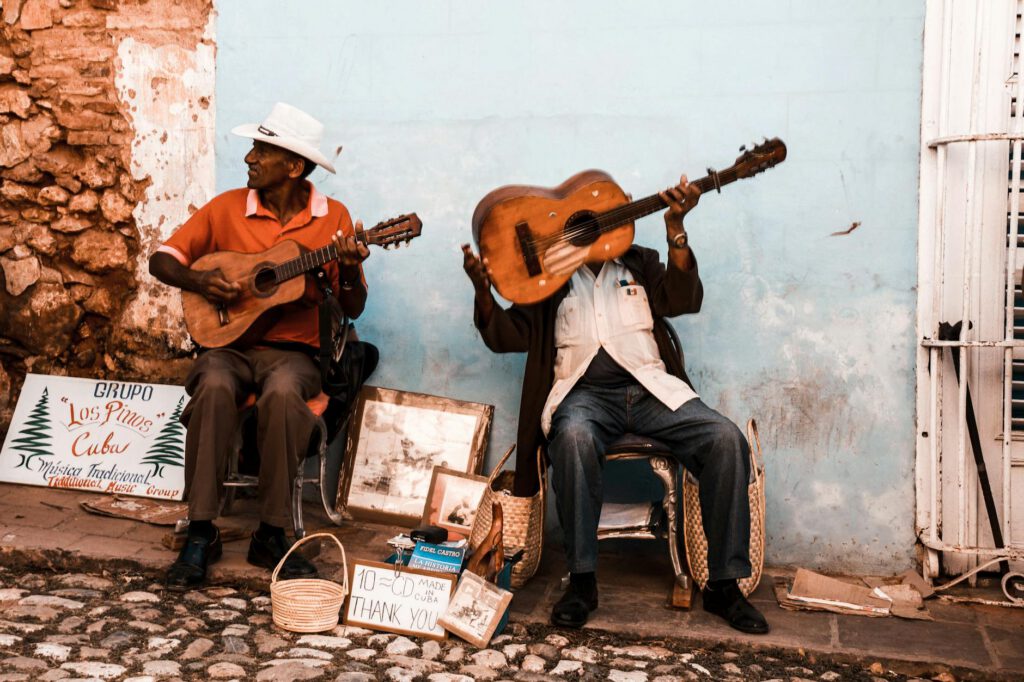
In brief
Cuban singer-songwriters
Poetic lyricscarried by voice and guitar
Heir to trovathat of Sindo Garay and Pepe Sánchez
Voices known everywhereSilvio Rodríguez, Pablo Milanés, Sara González
Not to be confused
Trova or nueva trova?
| Traditional trova | Nueva trova | |
|---|---|---|
| Period | Late 19th, early 20th century | Since the late 1960s |
| Line-up | Voice and guitar | Voice, guitar, sometimes a band |
| Themes | Love, nature, homeland | Love, poetry, society |
“
Listen to Silvio Rodríguez’s “Ojalá” or Pablo Milanés’s “Yolanda” before you go: two lovely ways in.
A
AzuuucAOur team in Havana
Silvio RodríguezPablo Milanés
Further reading
Hearing trova

Casa de la TrovaThe venues where trova is played every night.Read the entry →

HavanaOld town, Malecón and live music.Things to do in Havana →

Fábrica de Arte CubanoConcerts, exhibitions and Havana nights.Read the entry →
Your questions
What is nueva trova?
A singer-songwriter movement born in Cuba in the late 1960s: poetic lyrics, sung with voice and guitar.
Who are the nueva trova singers?
Silvio Rodríguez, Pablo Milanés, Noel Nicola, Vicente Feliú and Sara González are its best-known figures.
How is it different from traditional trova?
Traditional trova, born in Santiago in the 19th century, sings mostly of love and nature. Nueva trova keeps the guitar and adds a more modern songwriting.
Which songs should I listen to?
Silvio Rodríguez’s “Ojalá” and “Ángel para un final”, Pablo Milanés’s “Yolanda”, among many others.
Where can I hear it in Cuba?
In the Casas de la Trova and cultural centres, where trovadores of all generations perform.

Free adviceNo commitment, no feeReply within 24 hOur team lives in HavanaLive Cuban music on your trip?Message us on WhatsAppOur team is based in Havana. Reply within 24 h, in English, French, Spanish and Portuguese.
 Casa de la Trova
 Cuban music: son, rumba, danzón, salsa, trova and where to hear it