Skip to content
Contact us on WhatsApp
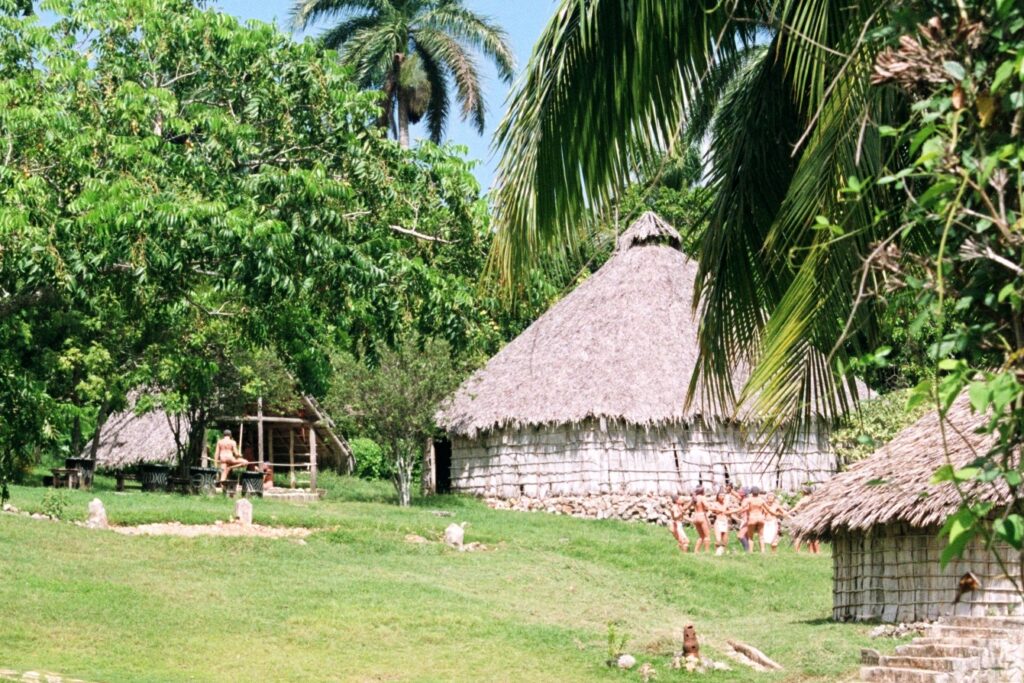
Reconstructed Taíno village at Chorro de Maíta
History · Banes

Banes and the Taínos

TaínosCuba’s first inhabitants
Chorro de Maítaa major pre-Columbian site
Bani museumthe objects found on site
Ox cart in the countryside near Banes
At a glance

Who were the Taínos?

A Caribbean peopleArawak-speaking, settled on the island long before 1492
Farmers and potterscassava, maize, ceramics and carved objects
The first tobacco smokersin 1492, the Taínos already smoked
Legacy

Taíno words you already know

Hammockfrom the Taíno hamaca
For sleepingThe Taínos slept in woven hammocks.
Hurricanefrom the Taíno huracán
The great windThe name for Caribbean storms comes from their language.
Cohibatobacco, in Taíno
A name that became famousThe great Cuban cigar brand took up this word.
The visit

In the footsteps of the Taínos, step by step

01The Bani Indo-Cuban museumJewellery, ceramics and everyday objects found in the area.
02Chorro de MaítaA pre-Columbian cemetery, with burials displayed on site.
03The reconstructed Taíno villageJust opposite: houses and scenes of daily life.
04Further on, Bariay bayWhere Columbus reached Cuba in 1492, by Cuban tradition.
Seashore near Banes
Banes

A story that begins long before the Spanish arrived
Quick facts

Taíno landmarks in the region

Bani museumin Banes, the best introduction
Chorro de Maítaburial site and reconstructed village
October 1492Columbus at Bariay, by Cuban tradition
The Taíno axenow the emblem of Holguín
Keep exploring

Keep exploring

Ox cart in the countryside near Banes
Things to do in BanesCuba’s archaeological capital and its surroundings.See the destination →
Seashore near Banes
GuardalavacaWhite sand and a coral reef, close to Banes.Things to do in Guardalavaca →
Gibara, on the north coast of Holguín province
HolguínThe city of parks, an ideal base for the north coast.Things to do in Holguín →

Your questions

Who were the Taínos?

An Arawak-speaking people who lived in Cuba and the Caribbean before the Spanish arrived. Farmers and potters, they grew cassava and tobacco among other crops.

Why is Banes Cuba’s archaeological capital?

The area is home to many Taíno sites, including Chorro de Maíta, and the Bani Indo-Cuban museum keeps objects found locally.

What is Chorro de Maíta?

One of Cuba’s most important pre-Columbian sites: an ancient cemetery where burials are displayed on site. A reconstructed Taíno village stands just opposite.

Are there Taíno traces today?

Yes: words such as hammock, hurricane or barbecue, the growing of cassava and tobacco, and the objects kept in museums such as the one in Banes.

How do I pay there?

In cash, in US dollars: Visa and Mastercard have been suspended in Cuba since June 2026. Bring small bills for taxis, meals and tips.

The AzuuucA team in Havana
Free adviceNo commitment, no feeReply within 24 hOur team lives in HavanaTaíno sites on your itinerary?Our team is based in Havana. Reply within 24 h, in English, French, Spanish and Portuguese.

Related terms

Tipping in CubaHabanos, Cuban cigars