
Cuba encyclopedia · Nature
The royal palm
National treeof Cuba
20 m and uptall when mature
Coat of armsit appears on it

In short
The island’s emblem tree
A tall palmsmooth grey trunk, green crownshaft on top
Native to the regionCuba, the Caribbean and Gulf of Mexico shores
All over the countrysidefrom Viñales to the east
Its uses
Every part of the palm is used
For the house
For the farm
+The bohío, the traditional rural house, is largely made from the palm.
Fact file
Roystonea regiaits scientific name

Coat of armsa symbol of steadfastness

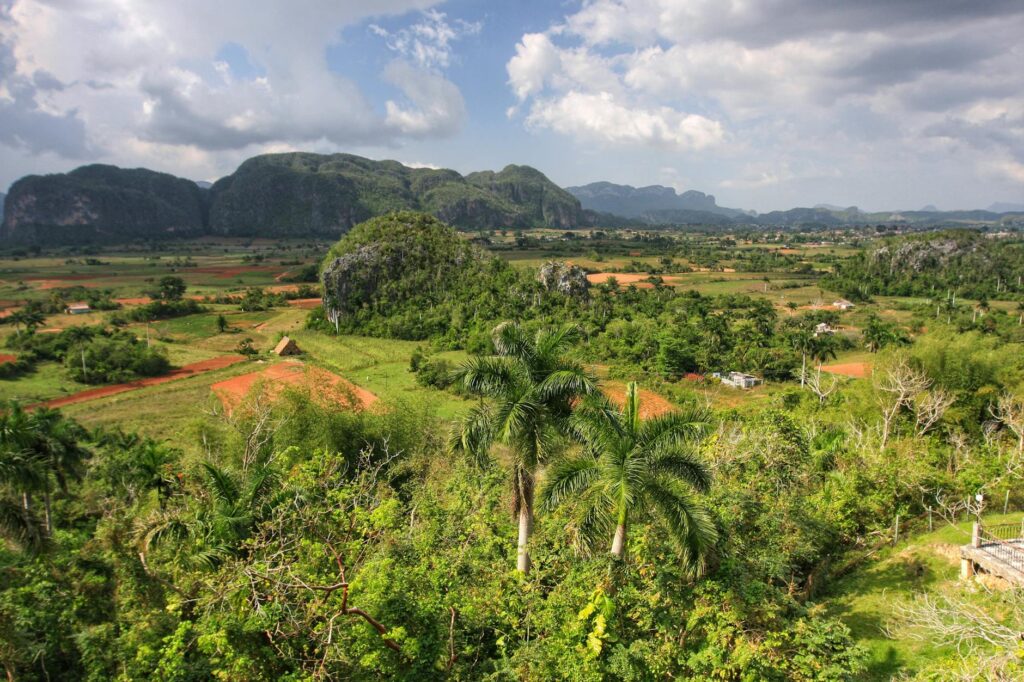
LandscapesViñales, valleys and plains

Palmicheits small fruits

What to know
Good to knowThe royal palm is protected and cannot be felled freely.It is one of Cuba’s national symbols.
Good to knowThe Viñales valley offers the finest silhouettes.Palms, tobacco fields and mogotes at sunset.
Go further
Things to do in ViñalesThe tobacco valley, from royal palms to mogotes.[‘Voir la destination’, ‘See the destination’, ‘Ver el destino’, ‘Ver o destino’]

The Viñales mogotesThe limestone hills of the tobacco valley.[‘Lire l’article’, ‘Read the entry’, ‘Leer la entrada’, ‘Ler o verbete’]

The tocororoThe national bird in the colours of the flag.[‘Lire l’article’, ‘Read the entry’, ‘Leer la entrada’, ‘Ler o verbete’]
Your questions
What is Cuba’s national tree?
It is the royal palm (Roystonea regia), called palma real. It appears on Cuba’s coat of arms, along with the key and the Phrygian cap.
How tall does the royal palm grow?
Mature trees commonly exceed 20 metres. The smooth grey trunk is topped by a green crownshaft and a crown of large fronds.
What is the royal palm used for in Cuba?
The trunk gives boards, the leaves thatch roofs, the yagua (leaf sheath) is used for walls or to wrap tobacco, and the palmiche fruit feeds pigs.
Is the royal palm unique to Cuba?
No, it also grows in other Caribbean countries and around the Gulf of Mexico, but it has become the symbol of Cuban landscapes.

Free adviceNo commitment, no feeReply within 24 hOur team lives in HavanaThe Cuban countryside and its palms? Let’s plan your stay.Message us on WhatsAppOur team is based in Havana. Reply within 24 h, in English, French, Spanish and Portuguese.
 Viñales mogotes
 Tocororo